
The global economy is entering a new era of uncertainty, shaped by geopolitical tensions, artificial intelligence investments, rising operational costs and evolving international trade policies.
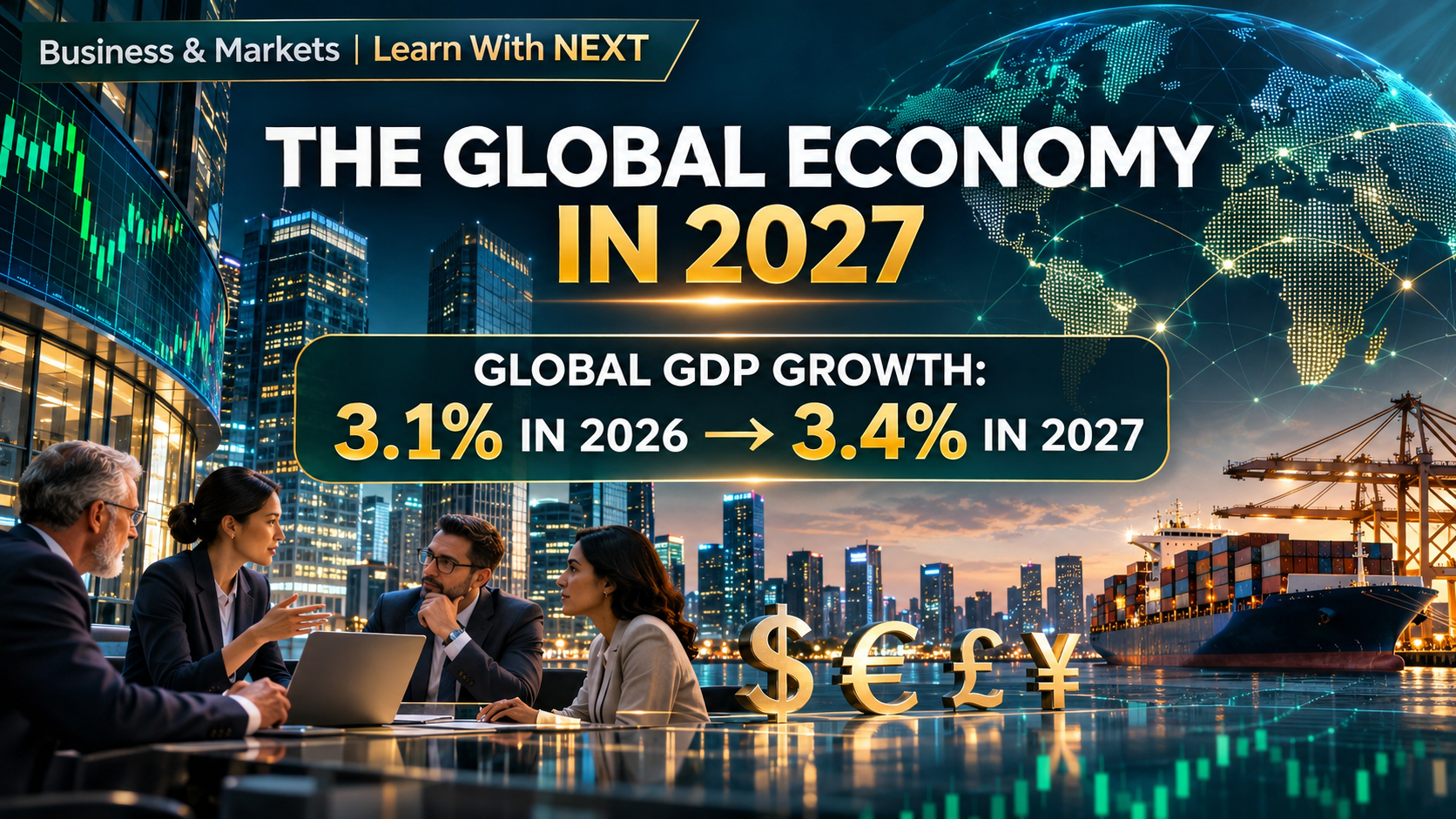
According to the International Monetary Fund’s (IMF) October 2026 World Economic Outlook, global economic growth is projected to reach 3.1% in 2026, before accelerating to 3.4% in 2027.
Despite this anticipated recovery, businesses continue to face inflationary pressures, supply chain disruptions and unpredictable market conditions.
The global economy in numbers:
- 3.1% – Projected global GDP growth in 2026.
- 3.4% – Projected global GDP growth in 2027.
- 4.7% – Projected global inflation in 2026.
- 4.1% – Projected global inflation in 2027.
- 4.3% – Potential long-term economic output gain for ASEAN through trade reforms.
- 4 million – Potential jobs created through ASEAN trade reforms supported by appropriate labour policies.
While technology-driven economies are benefiting from AI-related investments, energy-importing nations remain vulnerable to rising costs and external economic pressures.
For business leaders, navigating this changing landscape requires more than traditional management expertise. Financial intelligence, strategic leadership, supply chain resilience and data-driven decision-making are becoming increasingly important.
Organisations must rethink how they allocate resources, enter new markets, manage financial risks and adopt emerging technologies to remain competitive.
In an unpredictable global economy, adaptability could become one of the most valuable organisational capabilities.
The businesses that thrive tomorrow will be those that recognise change as an opportunity rather than a threat.
Sources: IMF World Economic Outlook, October 2026; The Nation, 17 November 2026.
Stay informed. Stay ahead. Learn With NEXT.